City streets
Ride the route you actually take
We think in upright posture, short hops, and gear that survives curbs and crosswinds — not showroom gloss.
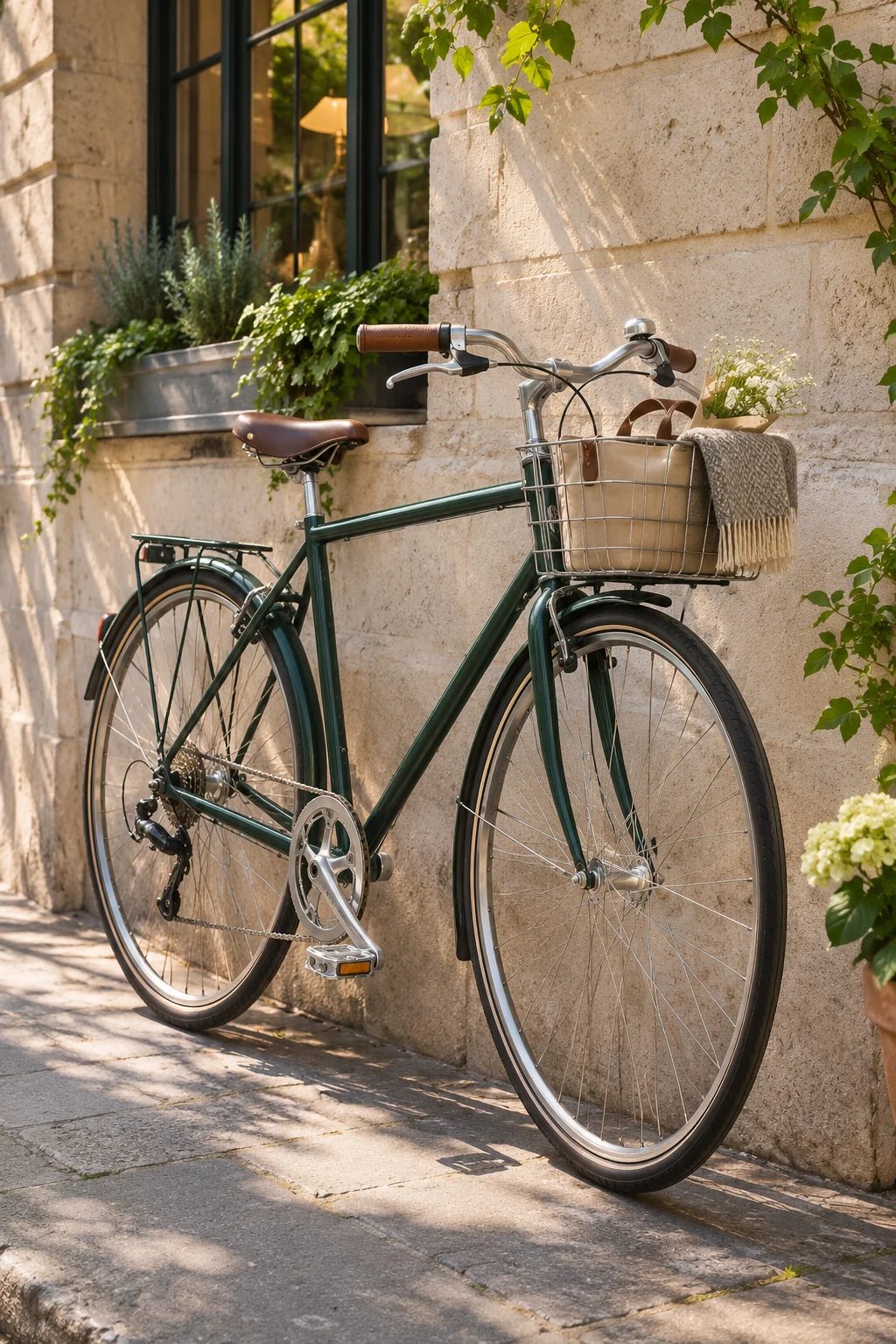
A basket, bell, and predictable handling turn errands into one clean trip instead of three short drives.
Where to begin
Pick your line
Everyday riding, explained
A city bike earns its keep on repeat trips — school drop-off, rail-trail connectors, the ride home after dark.
Fit before flash
Stand-over height, handlebar reach, and crank length change how often you choose the bike over the bus. A saddle set for a slight knee bend at the bottom of the stroke and level wrists on the levers make repeat trips feel natural.
Care that keeps rolling
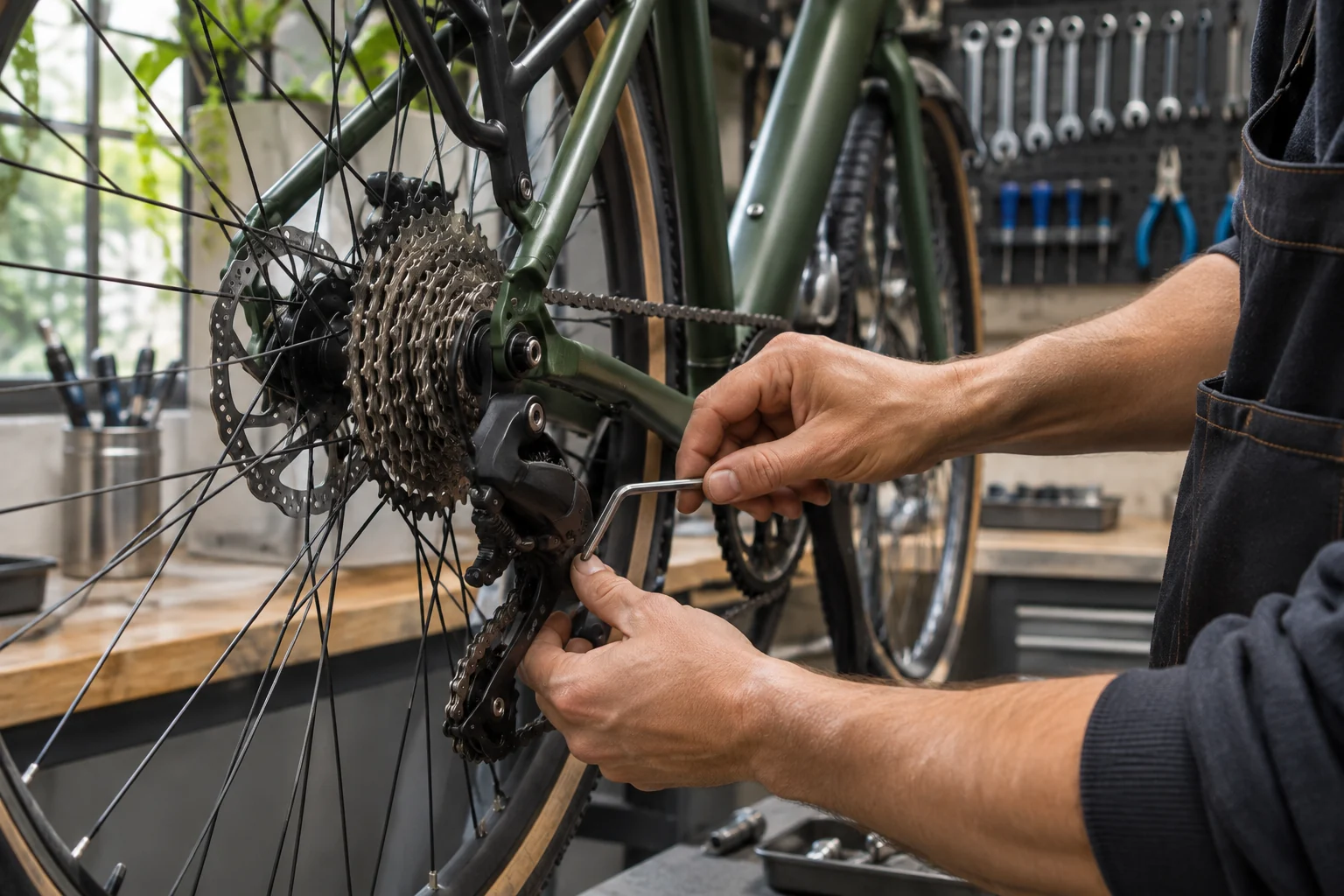
Tires, brakes, and drivetrain wear quietly until they do not. Before wet rides, squeeze the levers and glance at tread; note chain lubrication every few weeks and any grinding when you shift.
Street context
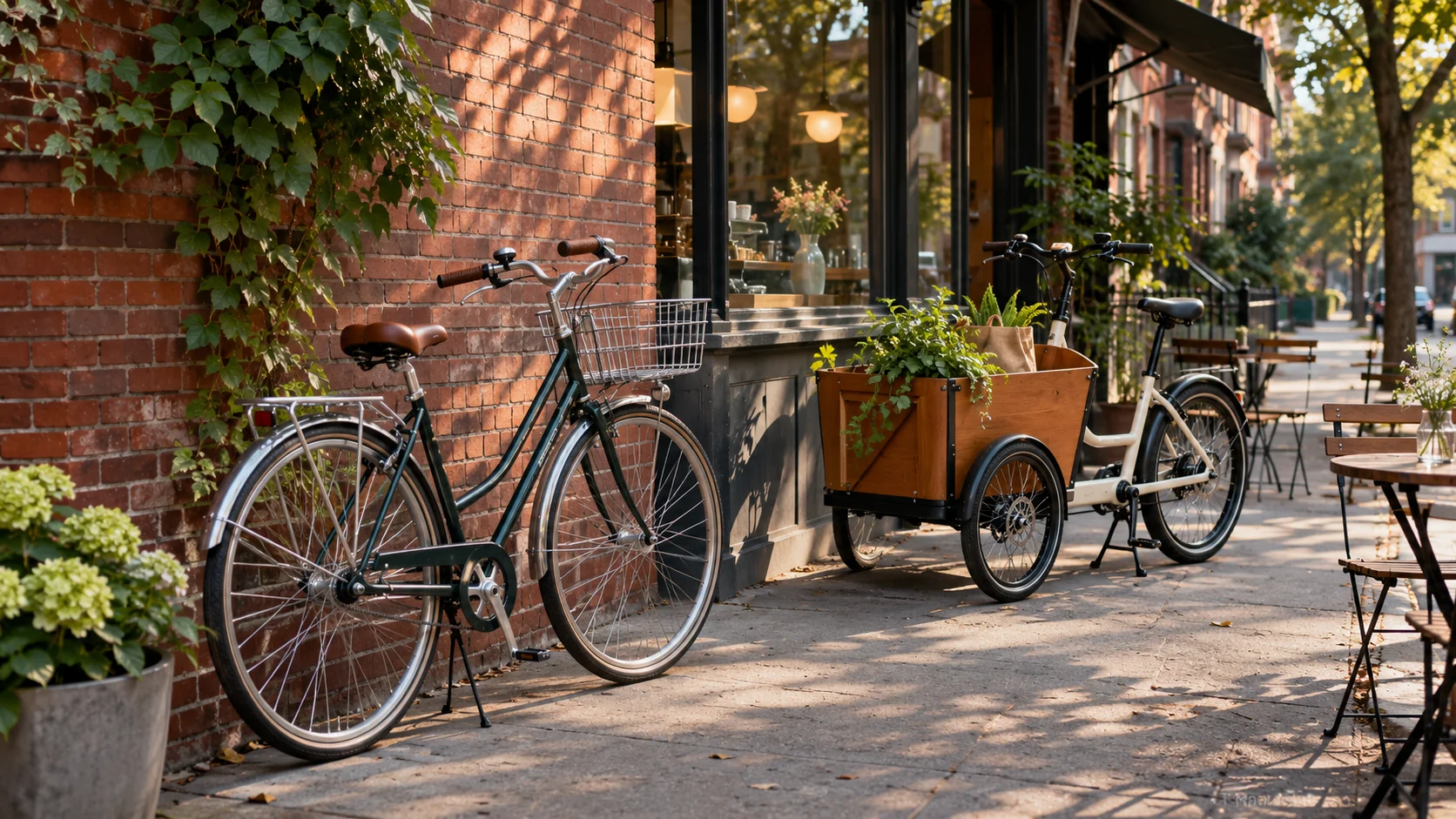
Utility bikes live outside cafes, at rack rows, and in narrow apartment entries. Visibility and lock choices matter as much as tire tread.
Parking & visibility
- Rack rows — lock frame and wheels; leave walking space on narrow sidewalks.
- Corner sight lines — reflective trim and a steady tail light help drivers spot you pulling out.
- Apartment entries — measure hall width and lift weight before assuming a cargo bike fits indoors.